Guides
How to Make Authentic Moroccan Mint Tea
The method, the ritual and the common mistakes — why the leaves are rinsed, why the pour is made from a height, and why there are always three glasses.
The Moroccan Cooks KitchenUpdated
Moroccan mint tea is simple to make and easy to make badly. Almost every version served outside Morocco goes wrong in one of four places, and all four are fixable in under a minute.
Use gunpowder green tea
The leaves are rolled into small pellets, which is where the name comes from. Gunpowder is strong and astringent enough to hold its own against a large bunch of mint and several spoons of sugar. A delicate green tea disappears completely.
Rinse the leaves first
Pour a small amount of boiling water over the dry tea, swirl for thirty seconds, and throw that water away. This removes dust and a good deal of the harsh bitterness. Skipping it is the most common reason homemade mint tea tastes sharp.
Save the first infusion
Add a little more boiling water, bring it briefly to a simmer, then pour that liquid into a glass and set it aside. This first extraction carries most of the tea's aroma. It goes back into the pot after the mint and sugar are added, so nothing is lost — but it is not boiled along with the mint, which would flatten it.
Spearmint, and plenty of it
Na'na' is spearmint. Peppermint is far more aggressive and will take over. Use a whole large bunch for a litre of tea, stalks included — the stalks carry a surprising amount of flavour and hold the leaves off the bottom of the pot.
Do not boil the mint
Three or four minutes at a bare simmer is enough. Boiled mint turns bitter and blackens, and once it does there is no rescuing the pot.
Mix by pouring, not stirring
Fill a glass from the pot and pour it straight back in, three or four times. This dissolves the sugar and evens out the strength without disturbing the leaves. A spoon in the pot bruises the mint.
Pour from a height
The high pour is not showmanship. It aerates the tea, which softens the tannins, cools it enough to hold a thin glass, and raises the layer of foam — the taj, or crown — that is the sign of a properly made glass. Start with the spout close to the glass and lift as it fills.
The three glasses
A Moroccan host serves three rounds, each drawn from the same pot and each a little stronger than the last. A Maghrebi saying attaches a character to each — gentle as life, strong as love, bitter as death. Accepting all three is the polite thing to do.
Common questions about sugar
Traditional mint tea is sweet: roughly a tablespoon of sugar per glass, often added as a broken piece of sugar loaf. Reduce it if you like, but be aware that the sugar is doing real work rounding off the tannin, and an unsweetened pot will taste noticeably more bitter than you expect.
Frequently asked questions
Why is Moroccan tea poured from so high?
Can I use dried mint for Moroccan tea?
How many times can you reuse the leaves?
Get Moroccan recipes in your inbox
New recipes, cooking tips and delicious ideas — one email a week.
Recipes from this article
Moroccan Mint Tea — Atay bi Na'na'
Gunpowder green tea steeped with a large bunch of spearmint and sugar, then poured from a height into small glasses.
Chebakia — Moroccan Sesame and Honey Rosettes
Spiced sesame dough folded into flowers, fried until crisp and soaked in warm honey and orange blossom water.
Msemen — Moroccan Layered Flatbread
Squares of semolina dough stretched paper thin, folded with butter and pan-fried into flaky layers for breakfast with honey and tea.
Keep reading
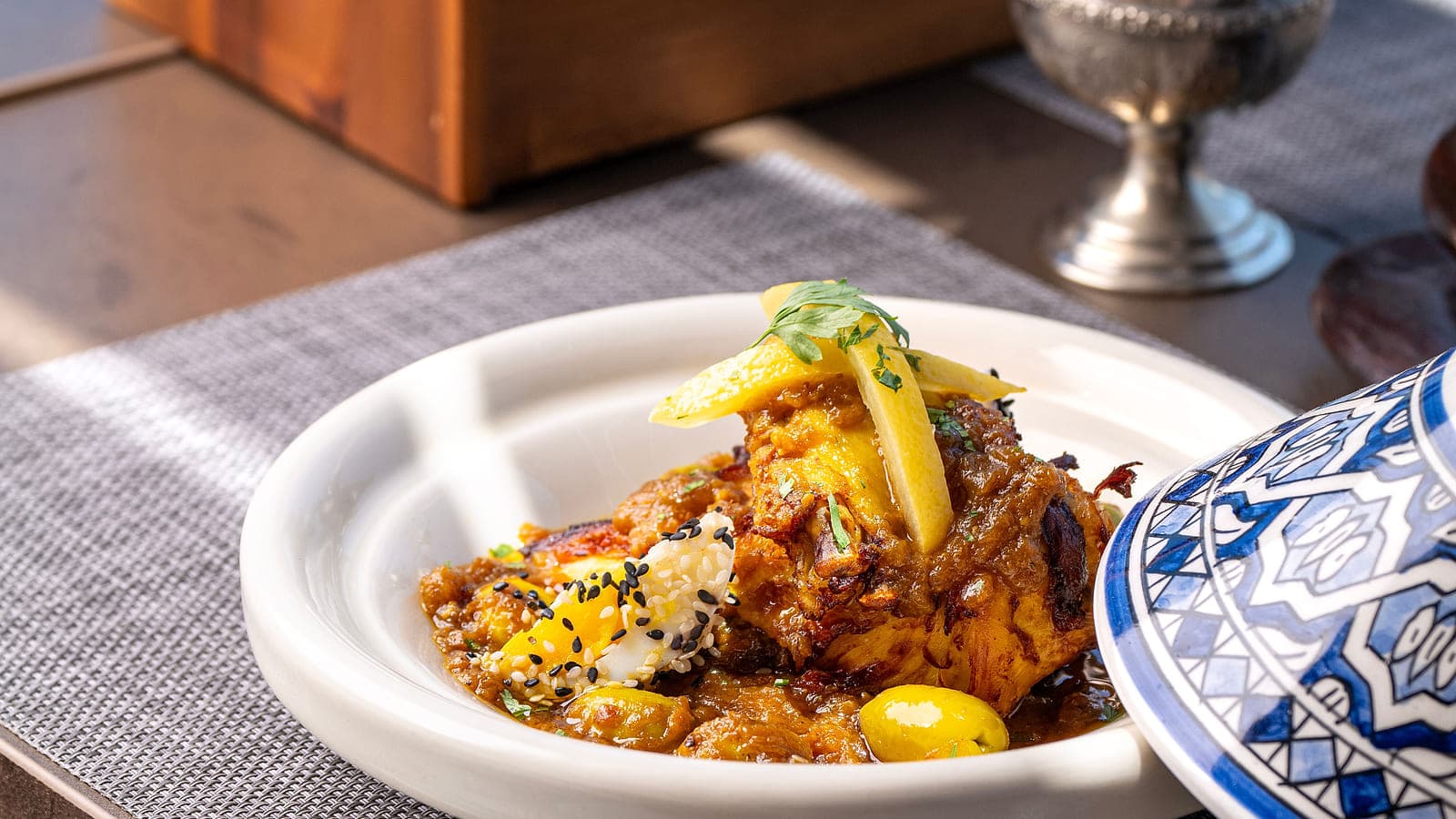
Moroccan Cuisine
What Makes Moroccan Cuisine Special?
Where Moroccan cooking came from, why sweet meets savoury so often, and the handful of techniques that shape almost every dish.
Guides
Traditional Moroccan Breakfast Ideas
What a Moroccan breakfast actually looks like, from weekday bread and olive oil to the full Friday spread — and how to put one together at home.