Moroccan Cuisine
What Makes Moroccan Cuisine Special?
Where Moroccan cooking came from, why sweet meets savoury so often, and the handful of techniques that shape almost every dish.
The Moroccan Cooks KitchenUpdated
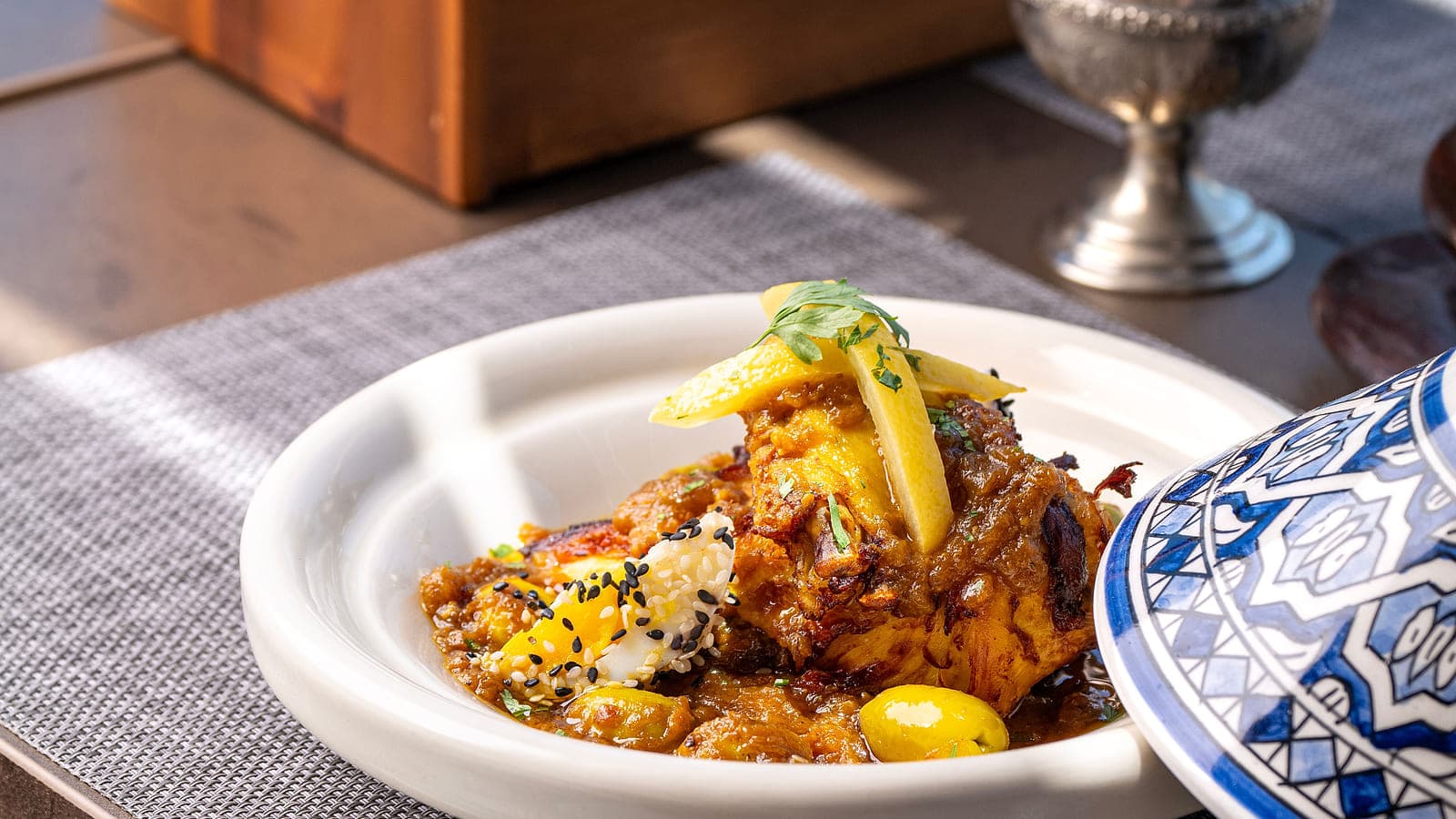
Moroccan food is often described as a crossroads cuisine, which is true but not very useful. What actually distinguishes it is a small set of habits — how heat is used, how sweetness is deployed, how a table is arranged — that show up across dishes that otherwise have nothing in common.
Four culinary inheritances
The Amazigh layer is the oldest and the most structural: couscous, tagine cooking, barley, olive oil, preserved foods. Arab arrivals from the seventh century onward brought spices, sugar, nuts, dried fruit and the pastry tradition. Andalusian refugees arriving from Spain after 1492 brought the olive and citrus groves of the north and a taste for elaborate composed dishes. The Mediterranean and Atlantic coasts supply the fish, and the French protectorate left behind coffee, baguettes and the café.
None of these replaced what came before. They stacked.
Sweet against savoury, deliberately
The combination that surprises visitors most — prunes with beef, icing sugar on a chicken pie, honey in a lamb tagine — is a direct inheritance from medieval Arab-Andalusian cooking, where sugar was a spice like any other. It is not a garnish or a modern fusion. In a tagine with prunes, the honey exists to push against the pepper and ginger in the meat, and removing it leaves the dish flat rather than merely less sweet.
Low heat, long time, little liquid
The conical tagine lid is a condensation device: steam rises, cools against the cone and runs back down into the food. This lets a cook use very little added water, which means flavours concentrate instead of dispersing. Most Moroccan stews are therefore built in layers and left alone rather than stirred, and the sauce that results is thick enough to scoop with bread.
Preservation as a flavour, not a compromise
Preserved lemons, smen (aged butter), olives, dried fruit and khlii (confit meat) are all products of a climate without refrigeration, and all of them are now used for what they taste like rather than because they are needed. A preserved lemon does not taste of lemon; it tastes of something salt-fermented and floral that fresh citrus cannot replace.
The table is communal
Moroccan meals are served on shared platters and eaten with bread from the section directly in front of you. This shapes the food: sauces need to be thick enough to pick up, meat needs to be soft enough to pull apart by hand, and small salads are served in multiples so everyone can reach several.
Spice used for aroma, not heat
Cumin, ginger, turmeric, cinnamon, sweet paprika, saffron and black pepper do most of the work. Chilli is present but usually served alongside as harissa, so each person decides. This is why Moroccan food reads as warm and fragrant rather than hot.
What this means when you cook it
Three practical consequences. Buy whole spices and grind them if you can; the difference is larger here than in cuisines where spice is a background note. Use less liquid than your instinct suggests, because the vegetables will release more than you expect. And season at the end rather than the beginning, because preserved lemons, olives and reduced sauce all move the salt considerably.
The pot does the work. The cook's job is mostly to stay out of its way.
Frequently asked questions
What are the main ingredients in Moroccan cooking?
Is Moroccan food healthy?
Get Moroccan recipes in your inbox
New recipes, cooking tips and delicious ideas — one email a week.
Recipes from this article
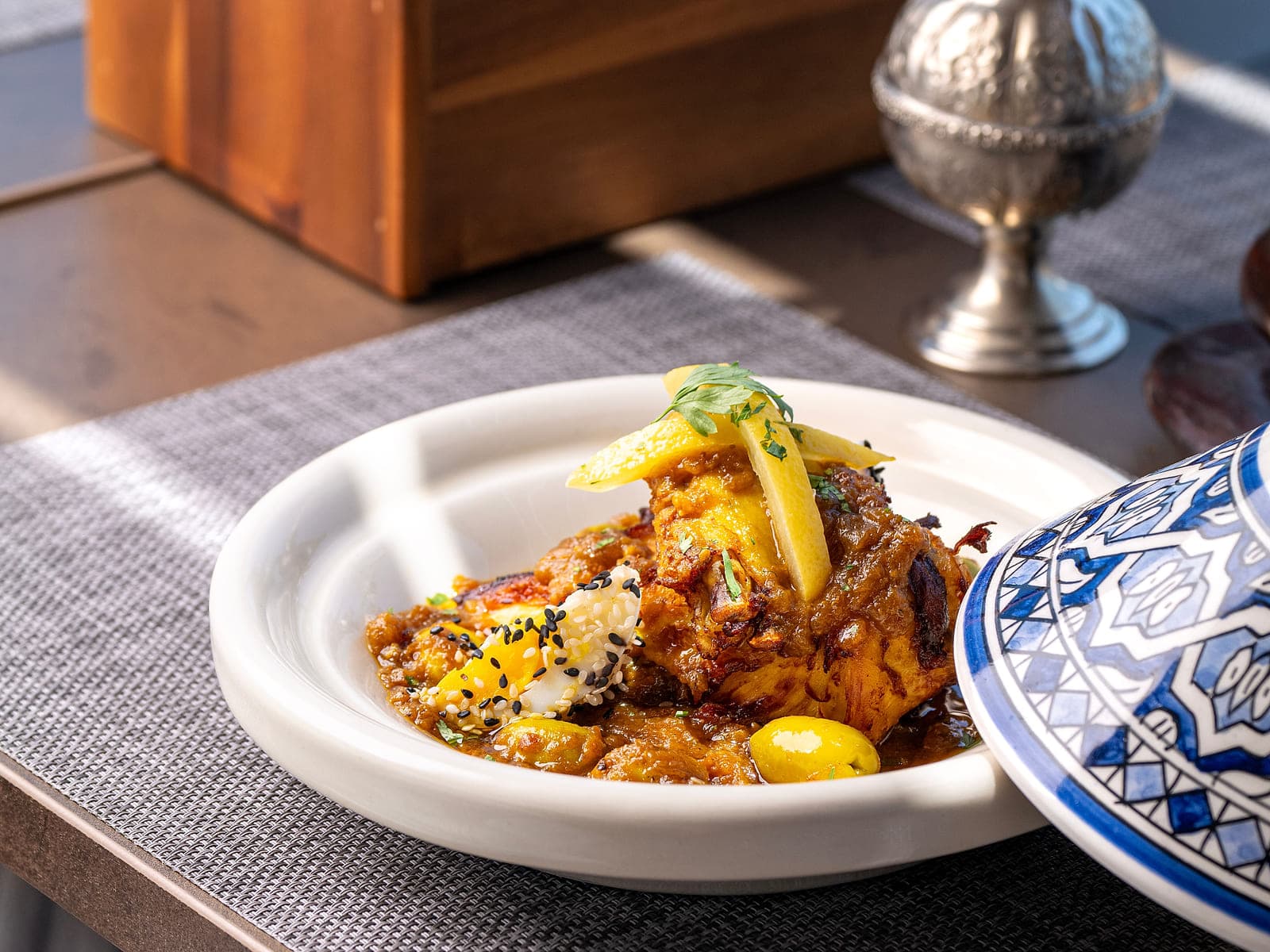
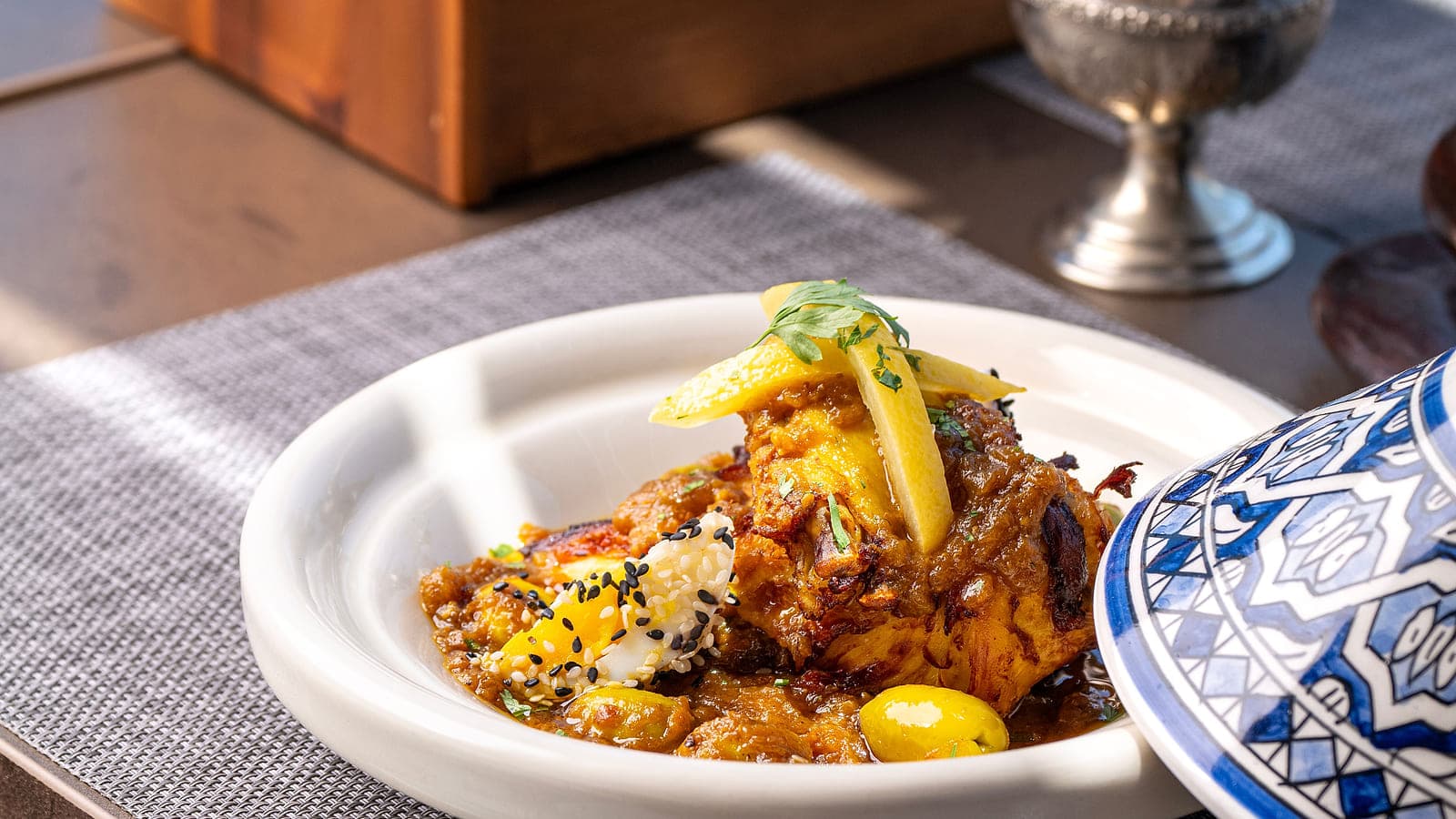
Moroccan Chicken Tagine with Preserved Lemon and Olives
Chicken slow-cooked with saffron, ginger, preserved lemon and green olives until the sauce turns golden and thick enough to scoop with bread.
Beef Tagine with Prunes and Almonds
Beef slow-cooked with cinnamon and saffron until tender, finished with honeyed prunes, toasted almonds and sesame seeds.
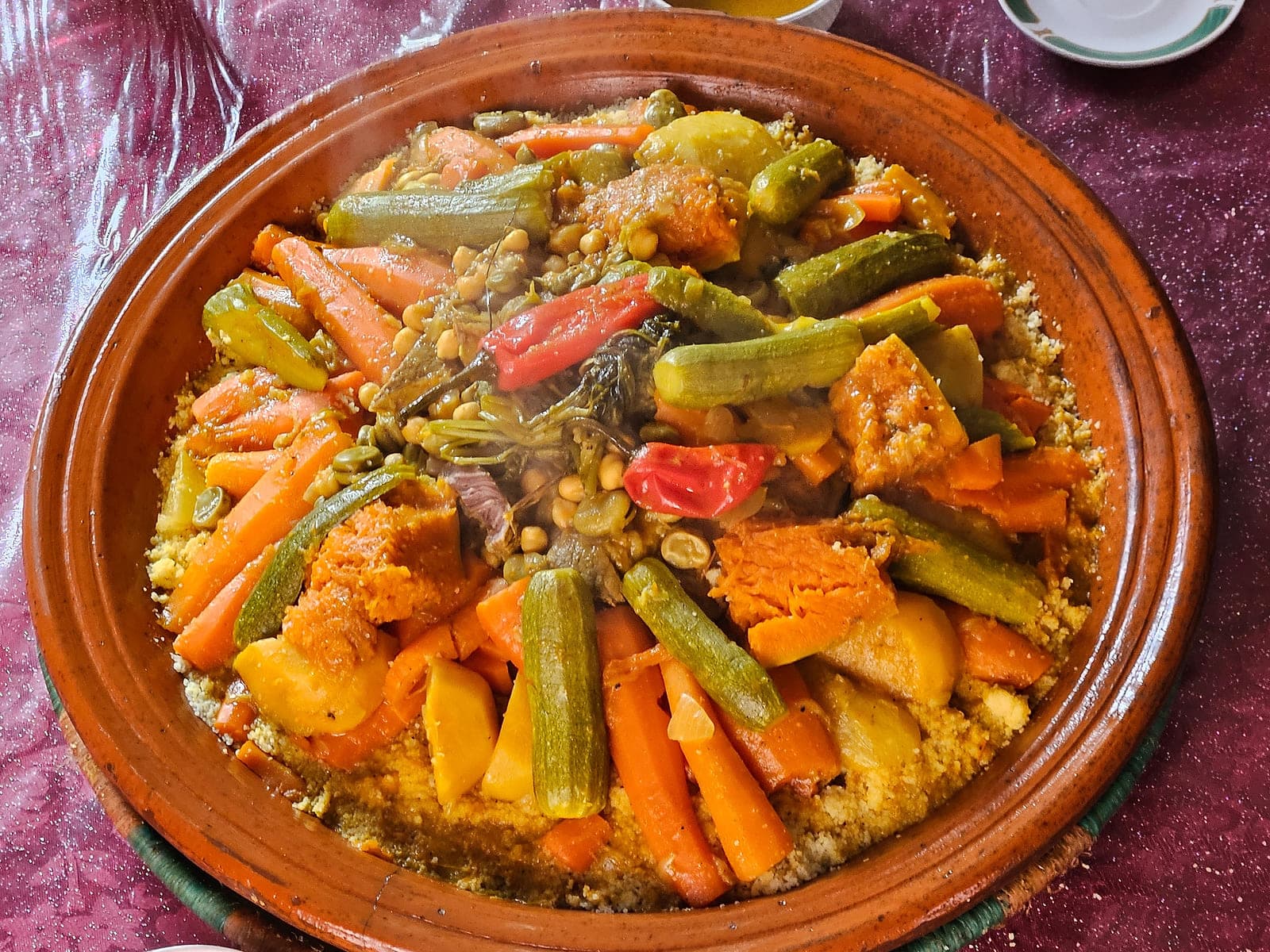
Traditional Moroccan Couscous with Seven Vegetables
Semolina steamed three times over a saffron broth and served under a mound of carrots, turnips, pumpkin, courgette and chickpeas.
Keep reading
Ingredients
Moroccan Spices: A Beginner's Guide
The ten spices that cover almost all Moroccan cooking, how to buy and store them, and what ras el hanout actually is.
Guides
The Different Types of Moroccan Tagines
Mqalli, mhammer, mrouzia and the rest — the classic tagine styles, what separates them, and how to choose and use a clay tagine pot.