Guides
Traditional Moroccan Breakfast Ideas
What a Moroccan breakfast actually looks like, from weekday bread and olive oil to the full Friday spread — and how to put one together at home.
The Moroccan Cooks KitchenUpdated
Breakfast in Morocco is a spread rather than a plate. Everything arrives at once — breads, a pot of tea, small dishes of honey, butter, oil, cheese and jam — and people build what they want from it.
The weekday version
On a working morning it is modest: yesterday's khobz with olive oil and a sprinkle of cumin or thyme, olives, a triangle of soft cheese, coffee or mint tea. Fifteen minutes, nothing cooked.
The weekend version
Fridays and weekends bring the breads out. This is where the Moroccan breakfast earns its reputation.
Msemen
Square, folded, pan-fried flatbread with visible layers. Eaten hot, torn and dipped into honey mixed with melted butter.
Baghrir
Thousand-hole semolina pancakes, cooked on one side only. The holes exist to hold the honey-butter syrup.
Harcha
A semolina pan bread with a sandy, crisp crust, split and filled with cheese or jam. The quickest of the three.
Khobz and batbout
Plain round bread and its pan-cooked cousin, both served with everything else on the table.
What goes on the bread
- Honey, ideally a dark one, mixed with melted butter into a warm syrup.
- Amlou — a thick spread of roasted almonds, argan oil and honey from the Souss region. The Moroccan answer to nut butter.
- Olive oil, on its own or with cumin and salt for dipping.
- Soft white cheese, olives, apricot or fig jam.
- Khlii — preserved beef, fried with eggs in a small dish and eaten straight from the pan.
What people drink
Mint tea, or coffee. Nous nous — half espresso, half hot milk — is the café standard. In the countryside, buttermilk (lben) appears alongside.
A weekend breakfast you can actually manage
- The night before: make a batch of msemen dough, shape and fold the squares, and refrigerate them on an oiled tray.
- The night before: blend the baghrir batter only if you plan to serve them; otherwise skip — the batter is best made fresh.
- In the morning: put the tea on, fry the msemen in a dry pan while the baghrir batter rises.
- Lay everything on the table at once — honey and butter warmed together, olives, cheese, jam, oil.
- Serve the tea from a height, and refill twice.
Frequently asked questions
What is a typical Moroccan breakfast?
What is amlou?
Do Moroccans eat eggs for breakfast?
Get Moroccan recipes in your inbox
New recipes, cooking tips and delicious ideas — one email a week.
Recipes from this article
Msemen — Moroccan Layered Flatbread
Squares of semolina dough stretched paper thin, folded with butter and pan-fried into flaky layers for breakfast with honey and tea.
Baghrir — Moroccan Thousand-Hole Pancakes
Light semolina pancakes cooked on one side only, covered in tiny holes that soak up melted butter and honey.
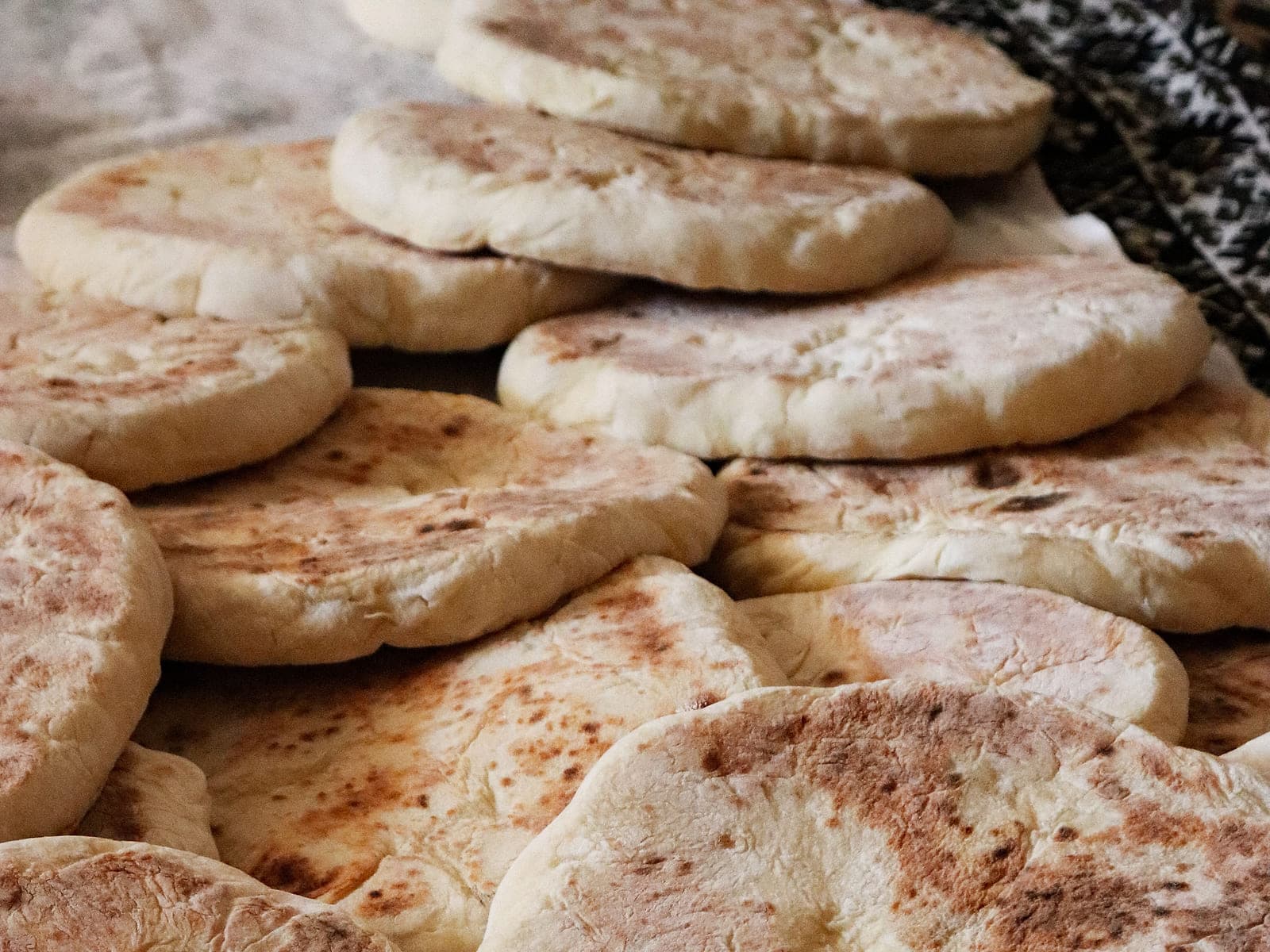
Khobz — Everyday Moroccan Bread
Round semolina and flour loaves baked flat and soft, the bread used as a fork at every Moroccan meal.
Moroccan Mint Tea — Atay bi Na'na'
Gunpowder green tea steeped with a large bunch of spearmint and sugar, then poured from a height into small glasses.
Keep reading
Occasions
Moroccan Ramadan Foods: What Is on the Iftar Table
Harira, chebakia, dates and sellou — the dishes that break the fast in Morocco, and a practical plan for cooking them without spending every evening in the kitchen.
Guides
How to Make Authentic Moroccan Mint Tea
The method, the ritual and the common mistakes — why the leaves are rinsed, why the pour is made from a height, and why there are always three glasses.