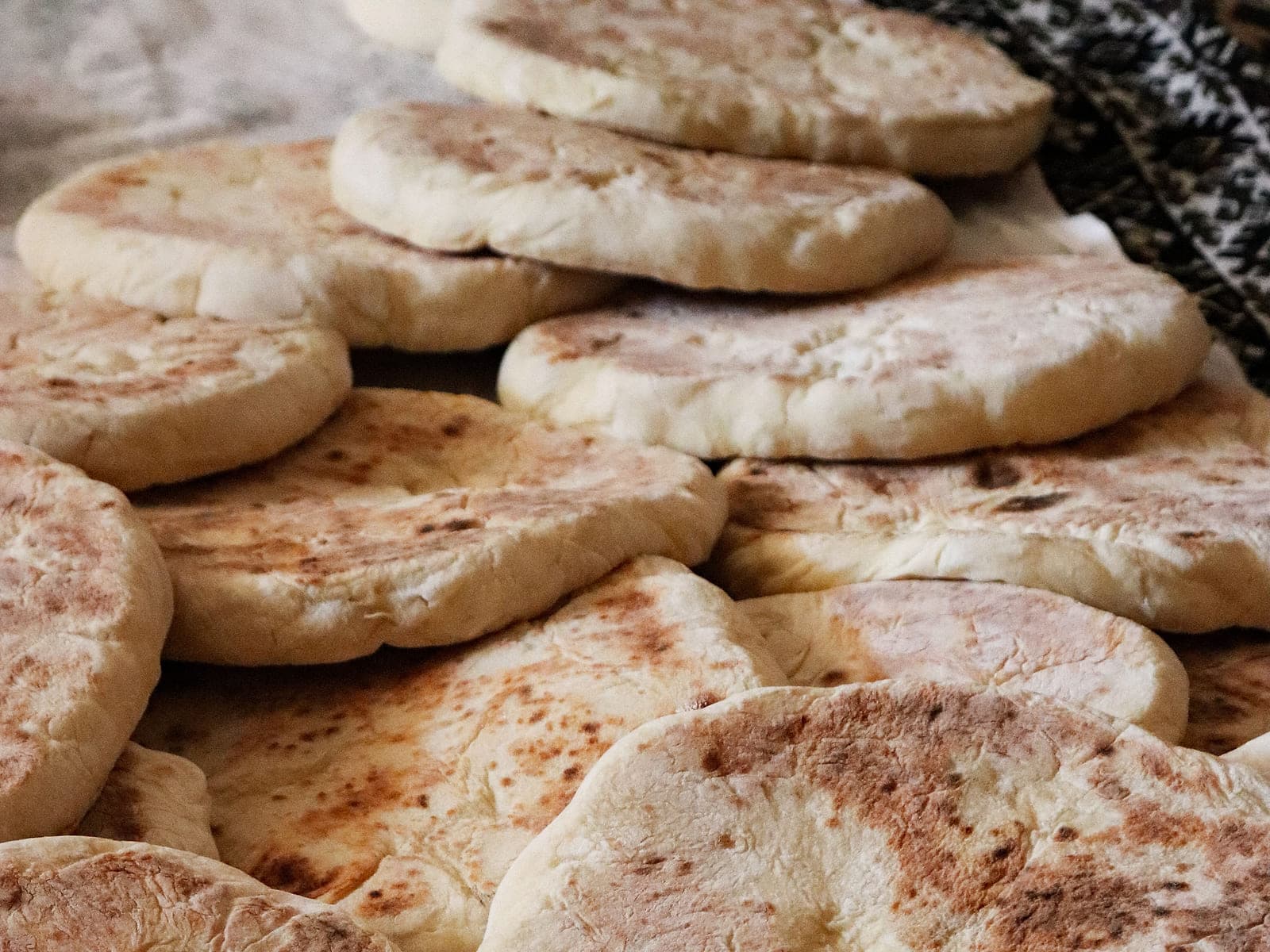
Moroccan Bread
Khobz — Everyday Moroccan Bread
Round semolina and flour loaves baked flat and soft, the bread used as a fork at every Moroccan meal.
45 minEasy
Khobz, batbout and the flatbreads that do the work of a fork at every Moroccan meal.
2 recipes
Round semolina and flour loaves baked flat and soft, the bread used as a fork at every Moroccan meal.
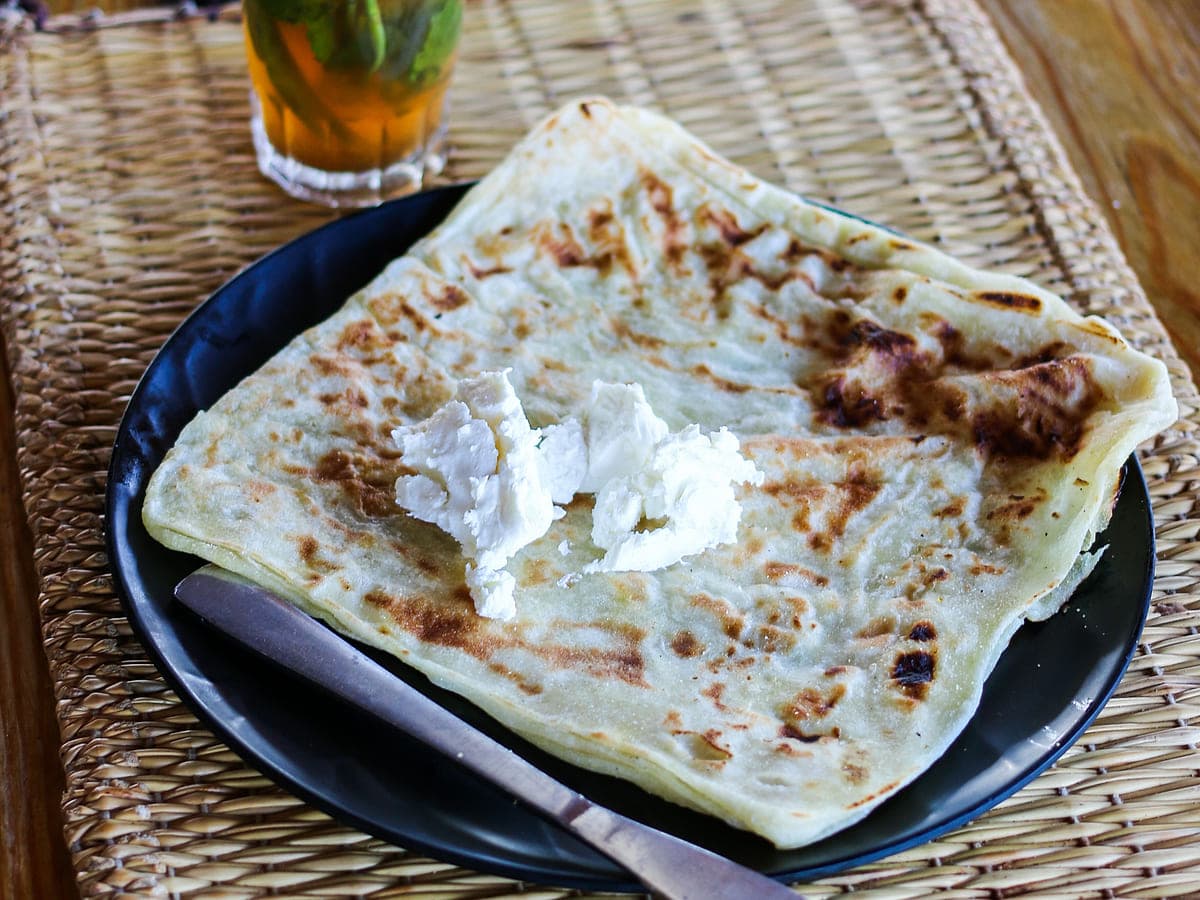
Squares of semolina dough stretched paper thin, folded with butter and pan-fried into flaky layers for breakfast with honey and tea.
Bread is not a side dish in Morocco, it is the utensil. Rounds of khobz are torn and used to scoop sauce straight from the communal dish, which is why almost every household bakes or buys it fresh daily.
The doughs are simple — flour, water, yeast, salt, sometimes semolina for bite — and most are baked flat and fast so the crumb stays soft enough to fold.
Once you can shape a round of khobz you can make batbout in a pan, and from there most Moroccan breads are within reach.
Slow-cooked stews of meat, vegetables and spices, named after the conical clay pot they are made in.
3 recipes

Hand-rolled semolina steamed until light, served under seven vegetables or simply with buttermilk.
1 recipe
Harira, bissara and the warming bowls that open a Moroccan meal — especially during Ramadan.
1 recipe

Cooked and raw salads served in small dishes — zaalouk, taktouka, carrot salad and more.
3 recipes